

GRAMMAR
Introduction to Japanese Particles
A fundamental guide to understanding how particles function in Japanese grammar.
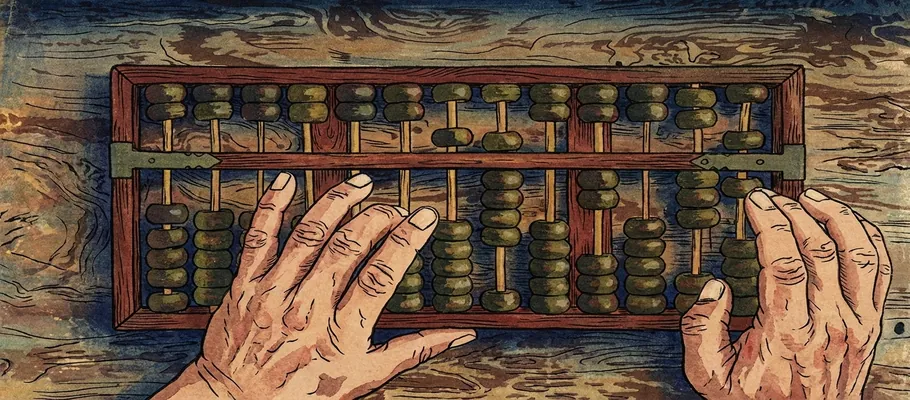
In modern japanese, you will encounter numbers written with arabic numerals as well as in Kanji. Arabic Numerals (1, 2, 3) are the standard for horizontal text. You will see them everywhere in modern life, including price tags, mathematical equations, phone numbers, and addresses. Kanji (一, 二, 三) Traditional and formal, Kanji numbers are the go-to for vertical text. If you are picking up a novel, reading a newspaper, or drafting a formal letter, you will likely encounter these characters.
While less common for counting, for stylistic and artistic purposes, sometimes numbers are written in Katakana (イチ, ニ, サン). Often appearing in graphic design or creative advertisements to make the numbers stand out.
Note: For educational purposes somtimes Hiragana (いち, に, さん) is used to write down numbers. But this is mainly the starting point for students and is common in books written for young children who have not yet mastered Kanji.
Like in english, japanese uses a decimal system with the numbers 1-10, and has simple rules to build higher numbers.
Numbers use the On-reading for the most part. But there are some exceptions. The prefered reading is highlighted in the table below. (You can read more about On/Kun Readings)
| Num | On reading | Kun reading | Kanji |
|---|---|---|---|
| 0 | 零 / 〇 | ||
| 1 | 一 | ||
| 2 | 二 | ||
| 3 | 三 | ||
| 4 | 四 | ||
| 5 | 五 | ||
| 6 | 六 | ||
| 7 | 七 | ||
| 8 | 八 | ||
| 9 | 九 | ||
| 10 | 十 |
Once you reach
Note: for Kun-readings above 10, modern Japanese uses the On-reading system for almost all counting purposes.
| Num | On reading | Kun reading | Kanji |
|---|---|---|---|
| 11 | 十一 | ||
| 12 | 十二 | ||
| 13 | 十三 | ||
| 14 | 十四 | ||
| 15 | 十五 | ||
| 16 | 十六 | ||
| 17 | 十七 | ||
| 18 | 十八 | ||
| 19 | 十九 |
Twenty is
Note: that for 40, 70, and 90, the more common spoken forms actually still use the Kun-derived digit sounds
| Num | reading | Kanji |
|---|---|---|
| 20 | 二十 | |
| 21 | 二十一 | |
| 22 | 二十二 | |
| 30 | 三十 | |
| 40 | 四十 | |
| 50 | 五十 | |
| 60 | 六十 | |
| 70 | 七十 | |
| 80 | 八十 | |
| 90 | 九十 |
| Num | reading | Kanji |
|---|---|---|
| 100 | 百 | |
| 200 | 二百 | |
| 300 | 三百 | |
| 400 | 四百 | |
| 500 | 五百 | |
| 600 | 六百 | |
| 700 | 七百 | |
| 800 | 八百 | |
| 900 | 九百 |
| Num | reading | Kanji |
|---|---|---|
| 1000 | 千 | |
| 2000 | 二千 | |
| 3000 | 三千 | |
| 4000 | 四千 | |
| 5000 | 五千 | |
| 6000 | 六千 | |
| 7000 | 七千 | |
| 8000 | 八千 | |
| 9000 | 九千 |
Following Chinese tradition, large numbers are created by grouping digits into myriads (every 10,000) rather than the Western thousands (1,000).
| Num | reading | Kanji |
|---|---|---|
| 10.000 | 一万 | |
| 20.000 | 二万 | |
| 30.000 | 三万 | |
| 40.000 | 四万 | |
| 50.000 | 五万 | |
| 60.000 | 六万 | |
| 70.000 | 七万 | |
| 80.000 | 八万 | |
| 90.000 | 九万 |
| Num | reading | Kanji |
|---|---|---|
| 100.000 | 十万 | |
| 200.000 | 二十万 | |
| 300.000 | 三十万 | |
| 400.000 | 四十万 | |
| 500.000 | 五十万 | |
| 600.000 | 六十万 | |
| 700.000 | 七十万 | |
| 800.000 | 八十万 | |
| 900.000 | 九十万 |
| Num | reading | Kanji |
|---|---|---|
| 1.000.000 | 百万 | |
| 10.000.000 | 千万 | |
| 100.000.000 | 億 | |
| 1.000.000.000 | 十億 | |
| 10.000.000.000 | 百億 |
Daiji (
Daiji are used to make tampering difficult, commonly seen on checks, certificates, and receipts. The same system is also used in china.
Note: While mostly replaced by modern numerals in daily life, daiji are still legally recognized and used in formal, traditional contexts.
| Num | Kanji | Daiji |
|---|---|---|
| 1 | ||
| 2 | ||
| 3 | ||
| 10 |
Note: The numbers four through nine usually do not have specific daiji forms.
Mastering numbers is one of the first steps toward fluency. It’s how you handle money, understand dates, and eventually learn Reading the Clock.
A fundamental guide to understanding how particles function in Japanese grammar.

Learn how to describe the world with い and な-adjectives by mastering their conjugations for tense and polarity to create rich, descriptive sentences.

Learn how to point out objects, places, and people using the Japanese demonstrative system, based on their distance from the speaker and listener.