
GRAMMAR
Introduction to Japanese Particles
A fundamental guide to understanding how particles function in Japanese grammar.
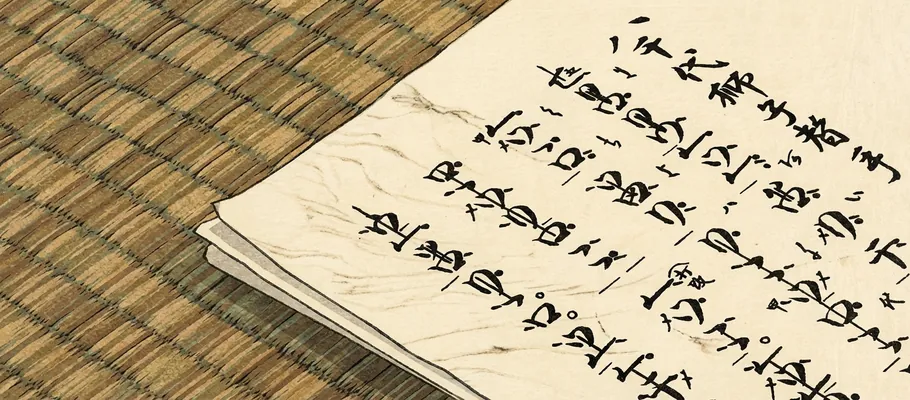
Modern Japanese is written using a combination of three distinct scripts: Hiragana, Katakana, and Kanji. While using three different character sets simultaneously might seem overly complex, each serves a specific purpose in structuring sentences and making written Japanese readable.
In addition to the three main scripts, the Latin alphabet is also used in specific modern contexts.
Hiragana (
Because it is entirely phonetic, any Japanese word can theoretically be written in Hiragana. However, in standard writing, it is primarily used for:
Katakana (
It is mainly used for:
Kanji (
There are thousands of Kanji in regular use, with the Japanese government designating 2,136 characters as the standard for daily literacy (the Jōyō Kanji).
Kanji generally form the core vocabulary of a sentence:
Because they were imported from China over many centuries, most Kanji have multiple pronunciations depending on the context and the words they are combined with. These are divided into Chinese-derived sounds and native Japanese sounds. You can read more about these rules in the On/Kun Readings post.
Written Japanese typically does not use spaces between words. Without spaces, a sentence written entirely in phonetic characters would be extremely difficult to parse. Kanji act as visual anchors that break the sentence into identifiable blocks of meaning.
Let's look at an example sentence that mixes all three scripts:
Here is how the sentence breaks down structurally:
By using all three scripts together, the boundaries between words and grammar become visually clear without the need for spaces.
Romaji (
You will see Romaji on street signs, train station boards, company logos, and acronyms (like CD or USB). Additionally, Romaji is the standard method for typing Japanese on a computer or smartphone—you type the word phonetically using the Latin alphabet, and the device's software automatically converts it into the appropriate Kana and Kanji.
If you are looking for advice on how to structure your studies of these scripts, check out The Roadmap to Nihongo: How to Start Your Japanese Journey.
A fundamental guide to understanding how particles function in Japanese grammar.
Learn how to describe the world with い and な-adjectives by mastering their conjugations for tense and polarity to create rich, descriptive sentences.