GRAMMAR
Introduction to Japanese Particles
A fundamental guide to understanding how particles function in Japanese grammar.
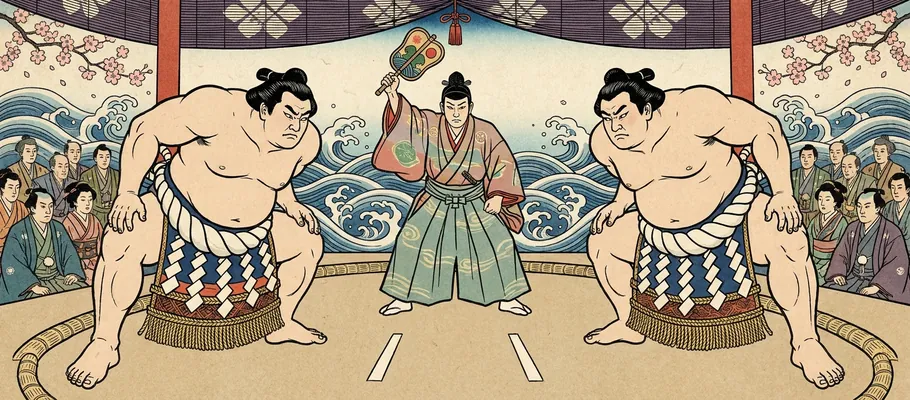
Whether you're deciding what to eat for lunch, talking about your favorite movie, or describing the weather, making comparisons is a daily necessity. In Japanese, there are a few key patterns that allow you to express these ideas clearly.
This guide will walk you through the three core components of Japanese comparisons:
For a full breakdown of adjectives, which are essential for making comparisons, see our guide on Introduction to Japanese Adjectives.
The simplest way to compare two things is by using the particle
A は B より [Adjective] です。 (A is more [Adjective] than B.)
Let's break it down:
This pattern works for both I-Adjectives and Na-Adjectives.
While
The full pattern looks like this:
A のほうが B より [Adjective] です。 (A is more [Adjective] than B.)
Using
Often, if the context is clear, you can even drop the B より part of the sentence entirely.
A のほうが [Adjective] です。 (A is the more [Adjective] one.)
Imagine someone asks you if you prefer coffee or tea. You could simply answer:
To say something is "the most" or "-est" (e.g., biggest, fastest, most interesting), you use the word
The structure is:
[Category] の中で、[Item] が 一番 [Adjective] です。 (Among [Category], [Item] is the most [Adjective].)
Now that you know how to make statements, let's learn how to ask questions about comparisons. The question word changes depending on whether you're comparing two items or three or more. For more on forming questions in general, see Forming Questions in Japanese.
To ask "Which is more...?" between two options, use
A と B と、どちらが [Adjective] ですか。
To ask about "the most" in a group, use
[Category] の中で、[Question Word] が 一番 [Adjective] ですか。
A very common and practical application of comparison grammar is giving advice using the phrase
The pattern changes slightly depending on whether the advice is positive (do something) or negative (don't do something).
| Advice Type | Structure | Example |
|---|---|---|
| Positive | Verb (た-form) + | |
| Negative | Verb (ない-form) + |
This structure implies a comparison between doing and not doing an action, concluding that one choice is better. It's a softer, more suggestive way to give advice than a direct command.
The grammar for comparisons is fundamental and appears constantly in daily conversation. Here are a few tips to help you get comfortable with it:
B より for "than B," A のほうが to highlight A, and 一番 for "the most."のほうが is extremely common in spoken Japanese.Because these patterns are so common, you will naturally internalize them as you progress on your journey with A Practical Guide to Language Immersion. The more you hear and read them in context, the more intuitive they will become.
A fundamental guide to understanding how particles function in Japanese grammar.
Learn how to describe the world with い and な-adjectives by mastering their conjugations for tense and polarity to create rich, descriptive sentences.